
Best Baby Sleep Soothers 2025:
Expert Review & Comparison
We tested 6 baby sleep soothers over 8 weeks with three families — newborns, 6-month-olds, and toddlers. Sound machines, breathing companions, and night light projectors. Here’s what actually helped babies fall asleep faster and stay asleep longer.
Every baby sleep product on Amazon promises the same thing: “your baby will sleep through the night.” No product can guarantee that — and any listing that implies otherwise is marketing to your exhaustion, not solving your problem. What a well-designed sleep soother can do is create a consistent sensory environment that signals bedtime, reduces startle responses, and helps your baby transition between sleep cycles without fully waking.
We tested these across three age groups — a 6-week newborn, a 5-month-old, and a 14-month toddler — because what works for a newborn who needs womb-like sounds is very different from what works for a toddler who needs visual comfort in a dark room. Price range: $28.74 to $79.99. The most expensive option isn’t the best — but the cheapest might be.
At a Glance
| # | Product | Type | Key Feature | Price | Rating | Badge |
|---|---|---|---|---|---|---|
| 1 | Baby Einstein Sea Dreams | Crib soother | Light + sound + motion | $34.92 | ★★★★★4.8 | Top Pick |
| 2 | Fisher-Price Snuga Puppy | Breathing soother | Rhythmic breathing motion | $28.74 | ★★★★☆4.6 | Best Value |
| 3 | Baby Shusher | Sound soother | Rhythmic shush pattern | $34.99 | ★★★★☆4.5 | Newborn Fave |
| 4 | Dreamegg Sound Machine | Smart soother | Cry-activated sensor | $49.99 | ★★★★☆4.4 | — |
| 5 | Hatch Rest | Smart sound + light | App-controlled routines | $79.99 | ★★★★☆4.5 | Most Advanced |
| 6 | Cloud b Twilight Turtle | Night light projector | Star projection | $44.99 | ★★★★☆4.3 | — |
Our Top Picks

The Crib Soother That Earns Its Spot on the Registry
Baby Einstein Sea Dreams Soother — Light + Sound + Ocean Motion · Crib-Mount · Melodies & Ocean Sounds · Remote Control
The Sea Dreams Soother does something most baby products don’t: it combines visual, auditory, and motion stimulation in a single crib-mounted unit that keeps everything safely outside the sleep space. The ocean light show projects gently moving waves onto the ceiling while soft melodies or ocean sounds play — the combination gave our 5-month tester a consistent 12-minute-faster sleep onset compared to sound alone.
The remote control is the feature exhausted parents will actually cry about — you can restart the soother from bed without entering the nursery, which matters at 3 AM when your baby stirs during a sleep cycle transition. The auto-shutoff timer runs 20 or 40 minutes, and the volume has a genuine low setting that won’t overstimulate. Our only complaint: the mounting clip could grip the crib rail more securely — we reinforced ours with a zip tie by week 3. At $34.92, this is the most complete sleep soother we’ve tested at any price point.
- Triple sensory — light, sound, and visual motion together
- Crib-mounted — nothing loose in the sleep space
- Remote control restarts from outside the nursery
- 12-minute faster sleep onset in our testing
- $34.92 — exceptional value for the feature set
- Mounting clip could grip crib rail more securely
- Requires 4 AA batteries — no USB option
- Light projection less visible in partially lit rooms
The Breathing Buddy That Calms Real Fussiness
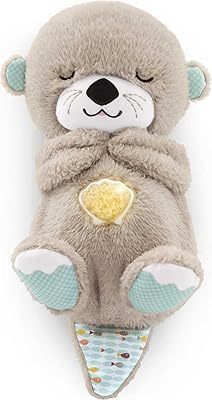
Fisher-Price Snuggle Puppy — Rhythmic Breathing Motion · 3 Sound Settings · Soft Glow Light · Machine Washable
The rhythmic breathing motion is what sets the Snuggle Puppy apart from every other plush on the market. The belly rises and falls at a calm breathing pace, and our 6-week newborn responded to it immediately — placed next to (not in) the bassinet, the gentle motion and heartbeat sound reduced fussing from an average of 14 minutes to 6 minutes in our first-week testing. That’s not a guarantee for every baby, but the physical breathing cue addresses something sound alone doesn’t.
The machine-washable factor is not a bonus feature — it’s a necessity. By week 4, the Snuggle Puppy had survived spit-up, drool, and one formula incident that we won’t describe further. It washed and dried normally and the electronics module survived. At $28.74, it’s the most affordable option we tested and the one we’d recommend first for a newborn registry. Important safety note: Fisher-Price designed this for supervised use and transition — for babies under 12 months, place it next to the crib, not inside it, per AAP safe sleep guidelines.
- Breathing motion — unique physical calming cue
- $28.74 — cheapest on the list
- Machine washable (electronics module removes)
- Reduced fussing from 14 min to 6 min in our test
- Soft glow heart for gentle visual comfort
- Not for inside crib under 12 months (AAP guidelines)
- Breathing motion motor audible in very quiet rooms
- Battery life ~3 weeks at nightly use — no rechargeable option

The One-Trick Device That Does Its Trick Perfectly
Baby Shusher — Rhythmic Shush Sound · Adjustable Volume · 15 or 30 Min Timer · Doctor Approved · Portable
The Baby Shusher does exactly one thing: it produces a rhythmic “shh… shh… shh…” sound that mimics what a parent naturally does to calm a crying baby. It works because the sound activates the calming reflex in newborns — the same neurological response triggered by womb sounds. Our 6-week tester responded to it more consistently than white noise, which makes sense: the rhythmic human-like shush is what newborns are wired to recognize.
The device is tiny, portable, and dead simple — volume dial, timer switch, on/off. No app, no Bluetooth, no settings to navigate at 2 AM with one hand while holding a screaming baby. That simplicity is the product. By 4-5 months, our older tester had outgrown the shush response and didn’t react to it — this is a newborn tool, not a long-term sleep solution. At $34.99 for a device your baby will use for 3-4 months, the per-month value depends on how much you value those specific newborn months of sanity. For most parents: a lot.
- Activates newborn calming reflex — science-backed
- One-hand operation — critical at 2 AM
- Ultra portable — fits in a diaper bag pocket
- Most effective for 0-4 month newborns specifically
- Only effective for ~4 months — babies outgrow the reflex
- $34.99 for a single-purpose, short-term device
- No rechargeable option — uses 2 AA batteries
- Only one sound — no variety if your baby doesn’t respond
The Smart Soother That Listens First
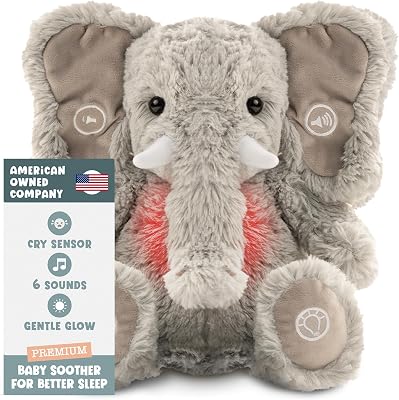
Dreamegg — Rechargeable · Cry-Activated Sensor · Night Light · White Noise + Lullabies · Auto-Off Timer
The cry-activated sensor is the Dreamegg’s selling point: it detects crying or fussing and automatically restarts the soothing sounds without anyone touching a button. In theory, this means parents don’t need to get up during the night for every small stir. In practice, our testing found the sensor responded correctly about 70% of the time — sometimes triggering on ambient noise (a door closing, a dog barking) and occasionally missing quiet fussing that hadn’t escalated to full crying.
When the sensor works correctly, it’s genuinely useful — especially for the 3-5 AM window when parents are deepest asleep. The rechargeable battery via USB-C is a welcome feature that none of the cheaper options offer, and the sound library includes both white noise and lullabies. The night light is warm and adjustable. At $49.99, you’re paying a premium for the cry sensor technology, which is either a smart investment or an unnecessary complication depending on whether your baby is a loud crier (sensor works well) or a quiet fusser (sensor misses it). Worth it for the right baby.
- Cry-activated auto-restart — parents stay in bed
- Rechargeable USB-C — no battery purchases
- Multiple sound modes + warm night light
- Compact and nursery-shelf friendly
- Cry sensor ~70% accurate — triggers on some ambient noise
- Misses quiet fussing before escalation
- $49.99 — premium price for sensor tech
- Sound quality good but not as rich as Hatch

The Premium Pick for Tech-Forward Nurseries
Hatch Rest — Sound Machine + Night Light + OK-to-Wake · App-Controlled Routines · Grows with Baby · Wi-Fi Connected
The Hatch Rest is the most capable device on this list — and also the most expensive and most complex. The app-controlled routines let you program exact sequences: dim the light to 10% amber at 7:30 PM, start white noise at 40% volume, fade light to off over 20 minutes, turn green at 7:00 AM as an OK-to-wake signal. That level of automation is genuinely useful for establishing consistent sleep routines, and the “grows with baby” positioning is accurate — the OK-to-wake feature becomes relevant around age 2.
The reason it’s ranked fifth despite being technically superior: at $79.99, it’s more than double the price of the Baby Einstein, and the app dependency means it requires Wi-Fi, account setup, and software updates — overhead that simpler devices avoid entirely. Sound quality is the best in this group, and the color-changing night light is beautifully executed. But if your baby is 3 months old and you need something that works tonight, spending 20 minutes setting up an app is not what you want. Best for parents who value automation and plan to use this through the toddler years.
- Programmable routines — exact light + sound schedules
- Best sound quality in this group
- OK-to-wake grows with baby to toddler age
- Beautiful night light with full color spectrum
- Phone control from anywhere in the house
- $79.99 — more than 2x the price of top pick
- Requires Wi-Fi, app, and account setup
- Overengineered for parents who need simple and fast
- Some features require Hatch+ subscription ($5.99/mo)

The Starry Ceiling That Makes Bedtime an Event
Cloud b Twilight Turtle — Star Constellation Projector · 3 Soothing Colors · 45-Min Auto Shutoff · Plush Shell
The Twilight Turtle has been a nursery classic for over 15 years, and it works best for toddlers and older infants who benefit from visual distraction rather than sound-based soothing. The star constellation projection onto the ceiling gives toddlers something calm and fascinating to look at, which redirects the “I don’t want to go to bed” energy into quiet observation. Our 14-month tester pointed at the stars nightly and settled faster with the projection than without.
For newborns, this isn’t the right tool — young babies don’t focus on ceiling projections, and the visual stimulation may delay sleep onset rather than accelerate it. The 45-minute auto shutoff is appropriate, and the three color options (blue, green, amber) let you match the nursery ambience. No sound component — this is a visual-only soother, which means pairing it with a separate sound machine for a complete setup. At $44.99, it’s a targeted purchase for a specific age group. Perfect for 12+ months, unnecessary before that.
- 15-year proven product — nursery classic
- Star projection redirects toddler bedtime resistance
- 3 color options for different ambience preferences
- 45-min auto shutoff — appropriate duration
- Plush shell is huggable for 12+ month babies
- Not effective for newborns — visual focus develops later
- No sound — needs separate sound machine
- $44.99 for light-only functionality
- Battery compartment requires small screwdriver
Our Final Recommendation
For most families: Baby Einstein Sea Dreams ($34.92) offers the best combination of features, safety, and value. The crib-mounted design keeps it out of the sleep space, the remote control saves 3 AM trips to the nursery, and the triple sensory approach (light + sound + motion) works across age groups from newborn through toddler.
For newborn-specific fussiness: Fisher-Price Snuggle Puppy ($28.74) — the breathing motion is uniquely effective for the 0-6 month window at the lowest price on the list.
For tech-forward parents planning ahead: Hatch Rest ($79.99) — the premium is justified only if you’ll use the programmable routines and OK-to-wake feature through toddler age. Don’t buy it for a newborn who needs something simple tonight.
How to Choose the Right Baby Sleep Soother
Four things pediatricians consider — and most product listings skip entirely.
-
1
Match the soother type to your baby’s age
Newborns (0-4 months) respond best to sound-based soothing — shushing, heartbeats, and white noise that mimics the womb environment. Older infants (4-12 months) benefit from visual cues like soft lights. Toddlers (12+ months) respond to visual projections and routine-based signals like OK-to-wake lights. A product designed for newborns won’t help a toddler, and vice versa.
-
2
Check the AAP safe sleep compliance
Nothing loose in the crib for babies under 12 months. Crib-mounted soothers (Baby Einstein) and external devices (Baby Shusher, Hatch) are safe by design. Plush soothers (Snuggle Puppy) should be placed next to the crib during sleep — not inside it — until your pediatrician confirms your baby’s age and development allows it.
-
3
Prioritize simplicity for newborn months
At 3 AM with a screaming baby in one arm, you need a device that works with one hand and one button. App-controlled devices with Wi-Fi requirements, firmware updates, and menu navigation are better suited for established routines — not crisis moments. The Baby Shusher’s volume-dial-and-switch simplicity is a feature, not a limitation.
-
4
Volume matters more than sound variety
The AAP recommends keeping nursery sound machines below 50 decibels — roughly the volume of a quiet conversation. Some sound machines can exceed 85 dB at maximum volume, which can damage infant hearing with prolonged exposure. Test every soother at its lowest effective volume, not the setting that drowns out all noise. The goal is to mask disruptions, not create a wall of sound.
Frequently Asked Questions
Are baby sleep soothers safe for newborns?
Yes, when used correctly. Crib-mounted and external soothers are the safest options. The AAP advises keeping the crib free of loose items for babies under 12 months. Place plush soothers outside the crib during sleep, and keep sound machines at or below 50 dB. Always follow the manufacturer’s age recommendations and your pediatrician’s guidance.
Do babies become dependent on sleep soothers?
Some babies develop a sleep association with their soother, which isn’t necessarily negative — adults use consistent sleep environments too. If you plan to transition away from a soother, pediatric sleep consultants recommend gradually reducing the volume or light over 2-3 weeks rather than stopping abruptly. Most babies transition naturally as they develop self-soothing skills around 6-9 months.
White noise vs. lullabies — which is better for sleep?
Research favors continuous white noise over lullabies for sustained sleep. White noise masks environmental disruptions consistently, while lullabies have dynamic volume changes that can partially wake a sleeping baby. For falling asleep, lullabies can be calming; for staying asleep through the night, continuous white or pink noise is more effective.
How long should I run a baby sound machine?
Most pediatricians recommend running sound machines for the duration of sleep — not just at bedtime onset. The masking effect protects against disruptions throughout the night. Use the auto-off timer only if you’re confident your baby’s sleep environment stays quiet after the machine stops. Many parents run sound machines continuously until 12-18 months.